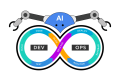
Self-Healing Pipelines: AI for Automated Incident Detection & Recovery Training Course
Self-healing automation involves utilizing intelligent systems to identify pipeline failures, determine their root causes, and initiate real-time recovery actions.
This instructor-led live training (available online or onsite) is designed for advanced-level professionals seeking to incorporate AI-driven incident detection and automated remediation into their delivery pipelines.
Upon completing this course, participants will be able to:
- Monitor pipelines using AI-based anomaly detection models.
- Design automated recovery workflows to address failures instantly.
- Implement intelligent feedback loops to prevent recurring issues.
- Enhance overall resilience and reliability in CI/CD systems.
Course Format
- Expert-led presentations featuring real-world examples.
- Applied exercises focused on pipeline reliability challenges.
- Hands-on development of automated resolution mechanisms within a lab environment.
Course Customization Options
- For tailored content that addresses your organization’s specific workflows or incident-response requirements, please contact us to arrange.
Course Outline
Foundations of Self-Healing Pipelines
- Key concepts of autonomous recovery
- Common failure patterns in CI/CD
- AI-driven approaches to pipeline stability
Real-Time Anomaly Detection
- Understanding pipeline telemetry sources
- Applying ML for predicting failures
- Detecting abnormal patterns with AI models
Incident Identification and Root Cause Analysis
- Classifying incident types automatically
- Correlating logs, traces, and metrics
- Using AI signals to isolate root causes
Auto-Recovery Workflow Design
- Defining automated remediation actions
- Triggering workflows from AI-based alerts
- Integrating runbooks with intelligent decision engines
Building Intelligent Feedback Loops
- Capturing historical failure data
- Training models for continuous improvement
- Ensuring adaptive learning in pipeline behavior
Integrating Self-Healing Capabilities into CI/CD
- Embedding automation across build and deploy stages
- Supporting hybrid and multi-cloud delivery platforms
- Aligning with organizational DevOps governance
Advanced Reliability Patterns
- Designing pipelines with predictive resilience
- Leveraging policy-based decision systems
- Implementing fallback strategies with AI orchestration
End-to-End Self-Healing Pipeline Implementation
- Combining anomaly detection, RCA, and auto-remediation
- Validating the resilience of completed workflows
- Ensuring observability and transparency for engineers
Summary and Next Steps
Requirements
- An understanding of CI/CD processes
- Experience with DevOps or SRE practices
- Knowledge of monitoring or observability tools
Audience
- SREs
- DevOps leads
- Platform reliability engineers
Open Training Courses require 5+ participants.
Self-Healing Pipelines: AI for Automated Incident Detection & Recovery Training Course - Booking
Self-Healing Pipelines: AI for Automated Incident Detection & Recovery Training Course - Enquiry
Self-Healing Pipelines: AI for Automated Incident Detection & Recovery - Consultancy Enquiry
Upcoming Courses
Related Courses
AI-Driven Deployment Orchestration & Auto-Rollback
14 HoursAI-driven deployment orchestration is an approach that uses machine learning and automation to guide rollout strategies, detect anomalies, and trigger automatic rollback when needed.
This instructor-led, live training (online or onsite) is aimed at intermediate-level professionals who wish to optimize deployment pipelines with AI-powered decision-making and resilience capabilities.
Upon completion of this training, participants will be able to:
- Implement AI-assisted rollout strategies for safer deployments.
- Predict deployment risk using machine learning–driven insights.
- Integrate automated rollback workflows based on anomaly detection.
- Enhance observability to support intelligent orchestration.
Format of the Course
- Instructor-led demonstrations with technical deep dives.
- Hands-on scenarios focused on deployment experimentation.
- Practical labs simulating real-world orchestration challenges.
Course Customization Options
- Customized integrations, toolchain support, or workflow alignment can be arranged upon request.
AI for DevOps: Integrating Intelligence into CI/CD Pipelines
14 HoursAI for DevOps refers to the application of artificial intelligence to enhance continuous integration, testing, deployment, and delivery processes through intelligent automation and optimization techniques.
This instructor-led, live training (available online or on-site) is designed for intermediate-level DevOps professionals seeking to incorporate AI and machine learning into their CI/CD pipelines to improve speed, accuracy, and overall quality.
By the end of this training, participants will be able to:
- Integrate AI tools into CI/CD workflows to enable intelligent automation.
- Apply AI-driven testing, code analysis, and change impact detection.
- Optimize build and deployment strategies using predictive insights.
- Implement traceability and continuous improvement through AI-enhanced feedback loops.
Course Format
- Interactive lectures and group discussions.
- Extensive exercises and hands-on practice.
- Real-time implementation in a live-lab environment.
Course Customization Options
- To request a customized version of this course, please contact us to arrange.
AI for Feature Flag & Canary Testing Strategy
14 HoursAI-driven rollout control is an approach that applies machine learning, pattern analysis, and adaptive decision models to feature flag operations and canary testing workflows.
This instructor-led, live training (online or onsite) is aimed at intermediate-level engineers and technical leads who wish to improve release reliability and optimize feature exposure decisions using AI-driven analysis.
Upon completion of this course, participants will be able to:
- Apply AI-based decision models to assess the risk of new feature exposure.
- Automate canary analysis using performance, behavioral, and operational indicators.
- Integrate intelligent scoring systems into feature flag platforms.
- Design rollout strategies that dynamically adjust based on real-time data.
Format of the Course
- Guided discussions supported by real-world scenarios.
- Hands-on exercises emphasizing AI-enhanced rollout strategies.
- Practical implementation in a simulated feature flag and canary environment.
Course Customization Options
- To arrange tailored content or integrate organization-specific tooling, please contact us.
AIOps Foundation – Accredited Training
35 HoursAIOps is a rapidly evolving field that addresses the needs of modern, complex IT environments—particularly those operating within cloud architectures. The AIOps Foundation course offers a comprehensive introduction to the concepts, technologies, and practices related to the use of artificial intelligence in IT operations.
The program covers the background of AIOps, its core principles, tools, and the organizational challenges faced by IT teams adopting these approaches.
The training concludes with an exam. Passing it grants the globally recognized AIOps Foundation certification, valid for three years.
Who is it for?
This course is designed for professionals and managers involved in:
IT operations
DevOps and Site Reliability Engineering (SRE)
Cloud architecture
Data analysis and Data Science
Software development
IT security
Product and project management
AIOps in Action: Incident Prediction and Root Cause Automation
14 HoursAIOps (Artificial Intelligence for IT Operations) is increasingly being used to predict incidents before they occur and automate root cause analysis (RCA) to minimize downtime and accelerate resolution.
This instructor-led, live training (online or onsite) is aimed at advanced-level IT professionals who wish to implement predictive analytics, automate remediation, and design intelligent RCA workflows using AIOps tools and machine learning models.
By the end of this training, participants will be able to:
- Build and train ML models to detect patterns leading to system failures.
- Automate RCA workflows based on multi-source log and metric correlation.
- Integrate alerting and remediation processes into existing platforms.
- Deploy and scale intelligent AIOps pipelines in production environments.
Format of the Course
- Interactive lecture and discussion.
- Lots of exercises and practice.
- Hands-on implementation in a live-lab environment.
Course Customization Options
- To request a customized training for this course, please contact us to arrange.
AIOps Fundamentals: Monitoring, Correlation, and Intelligent Alerting
14 HoursAIOps (Artificial Intelligence for IT Operations) is a practice that applies machine learning and analytics to automate and improve IT operations, particularly in the areas of monitoring, incident detection, and response.
This instructor-led, live training (online or onsite) is aimed at intermediate-level IT operations professionals who wish to implement AIOps techniques to correlate metrics and logs, reduce alert noise, and improve observability through intelligent automation.
By the end of this training, participants will be able to:
- Understand the principles and architecture of AIOps platforms.
- Correlate data across logs, metrics, and traces to identify root causes.
- Reduce alert fatigue through intelligent filtering and noise suppression.
- Use open-source or commercial tools to monitor and respond to incidents automatically.
Format of the Course
- Interactive lecture and discussion.
- Lots of exercises and practice.
- Hands-on implementation in a live-lab environment.
Course Customization Options
- To request a customized training for this course, please contact us to arrange.
Building an AIOps Pipeline with Open Source Tools
14 HoursAn AIOps pipeline built entirely with open-source tools allows teams to design cost-effective and flexible solutions for observability, anomaly detection, and intelligent alerting in production environments.
This instructor-led, live training (online or onsite) is aimed at advanced-level engineers who wish to build and deploy an end-to-end AIOps pipeline using tools like Prometheus, ELK, Grafana, and custom ML models.
By the end of this training, participants will be able to:
- Design an AIOps architecture using only open-source components.
- Collect and normalise data from logs, metrics, and traces.
- Apply ML models to detect anomalies and predict incidents.
- Automate alerting and remediation using open tooling.
Format of the Course
- Interactive lecture and discussion.
- Lots of exercises and practice.
- Hands-on implementation in a live-lab environment.
Course Customisation Options
- To request a customised training for this course, please contact us to arrange.
AI-Powered Test Generation and Coverage Prediction
14 HoursAI-driven test generation employs techniques and tools that utilize machine learning to automate the creation of test cases and anticipate testing gaps.
This instructor-led live training, available online or onsite, targets advanced professionals seeking to apply AI methods for automatic test generation and identifying areas with insufficient coverage.
After completing this workshop, participants will be equipped to:
- Utilize AI models to produce effective unit, integration, and end-to-end test scenarios.
- Examine codebases using machine learning to pinpoint potential coverage blind spots.
- Incorporate AI-based test generation into CI/CD workflows.
- Refine test strategies through predictive failure analytics.
Course Format
- Guided technical lectures enriched with expert insights.
- Scenario-based practice sessions and hands-on exercises.
- Practical experimentation within a controlled testing environment.
Course Customization Options
- For training tailored to your specific toolchain or workflows, please contact us to arrange it.
AI-Powered QA Automation in CI/CD
14 HoursAI-powered QA automation improves traditional testing by creating smart test cases, optimising regression coverage, and integrating intelligent quality gates into CI/CD pipelines for scalable and reliable software delivery.
This instructor-led, live training (online or on-site) is designed for intermediate-level QA and DevOps professionals who want to apply AI tools to automate and scale quality assurance within continuous integration and deployment workflows.
By the end of this training, participants will be able to:
- Generate, prioritise, and maintain tests using AI-driven automation platforms.
- Integrate intelligent QA gates into CI/CD pipelines to prevent regressions.
- Use AI for exploratory testing, defect prediction, and test flakiness analysis.
- Optimise testing time and coverage across fast-moving agile projects.
Course Format
- Interactive lectures and discussions.
- Numerous exercises and practice sessions.
- Hands-on implementation in a live-lab environment.
Course Customisation Options
- To request a customised training session for this course, please contact us to arrange.
Continuous Compliance with AI: Governance in CI/CD
14 HoursAI-enhanced compliance monitoring is a discipline that leverages intelligent automation to detect, enforce, and validate policy requirements throughout the software delivery lifecycle.
This instructor-led live training (available online or onsite) is designed for intermediate-level professionals seeking to integrate AI-driven compliance controls into their CI/CD pipelines.
Upon completing this training, participants will be able to:
- Apply AI-based checks to identify compliance gaps during software builds.
- Utilize intelligent policy engines to enforce regulatory, security, and licensing standards.
- Automatically detect configuration drift and deviations.
- Incorporate real-time compliance reporting into delivery workflows.
Course Format
- Instructor-guided presentations supplemented with practical examples.
- Hands-on exercises centered on real-world CI/CD compliance scenarios.
- Applied experimentation within a controlled DevSecOps lab environment.
Course Customization Options
- If your organization requires tailored compliance integrations, please contact us to arrange.
CI/CD for AI: Automating Docker-Based Model Builds and Deployments
21 HoursCI/CD for AI involves a systematic method for automating the packaging, testing, containerization, and deployment of AI models through continuous integration and continuous delivery pipelines.
This instructor-led, live training (available online or onsite) is designed for intermediate-level professionals who want to automate end-to-end AI model delivery workflows using Docker and CI/CD platforms.
By the end of the training, participants will be able to:
- Build automated pipelines for constructing and testing AI model containers.
- Establish version control and reproducibility for model lifecycles.
- Incorporate automated deployment strategies for AI services.
- Apply CI/CD best practices customized for machine learning operations.
Course Format
- Instructor-guided presentations and technical discussions.
- Practical labs and hands-on implementation exercises.
- Realistic CI/CD workflow simulations in a controlled environment.
Course Customization Options
- If your organization needs customized pipeline workflows or platform integrations, please contact us to tailor this course.
GitHub Copilot for DevOps Automation and Productivity
14 HoursGitHub Copilot is an artificial intelligence-driven coding assistant designed to automate various development tasks, including critical DevOps operations such as crafting YAML configurations, managing GitHub Actions, and developing deployment scripts.
This instructor-led live training, available both online and on-site, is tailored for beginner to intermediate professionals eager to utilize GitHub Copilot to streamline DevOps workflows, enhance automation capabilities, and significantly boost productivity.
Upon completing this training, participants will be equipped to:
- Utilize GitHub Copilot to support shell scripting, configuration management, and CI/CD pipelines.
- Harness AI-driven code completion features within YAML files and GitHub Actions.
- Accelerate processes related to testing, deployment, and automation workflows.
- Apply Copilot responsibly by understanding its limitations and adhering to industry best practices.
Course Format
- Interactive lectures and group discussions.
- Extensive exercises and practical practice sessions.
- Hands-on implementation within a live laboratory environment.
Customization Options
- For customized training arrangements, please reach out to us to coordinate your specific needs.
DevSecOps with AI: Automating Security in the Pipeline
14 HoursDevSecOps with AI is the practice of integrating artificial intelligence into DevOps pipelines to proactively detect vulnerabilities, enforce security policies, and automate response actions throughout the software delivery lifecycle.
This instructor-led, live training (online or onsite) is aimed at intermediate-level DevOps and security professionals who wish to apply AI-based tools and practices to enhance security automation across development and deployment pipelines.
By the end of this training, participants will be able to:
- Embed AI-driven security tools into CI/CD pipelines.
- Use static and dynamic analysis powered by AI to detect issues earlier.
- Automate secrets detection, code vulnerability scanning, and dependency risk analysis.
- Enable proactive threat modeling and policy enforcement using intelligent techniques.
Format of the Course
- Interactive lecture and discussion.
- Lots of exercises and practice.
- Hands-on implementation in a live-lab environment.
Course Customization Options
- To request a customized training for this course, please contact us to arrange.
Enterprise AIOps with Splunk, Moogsoft, and Dynatrace
14 HoursEnterprise AIOps platforms such as Splunk, Moogsoft, and Dynatrace offer powerful capabilities for detecting anomalies, correlating alerts, and automating responses across large-scale IT environments.
This instructor-led, live training (available online or on-site) is designed for intermediate-level enterprise IT teams aiming to integrate AIOps tools into their existing observability stack and operational workflows.
Upon completion of this training, participants will be able to:
- Configure and integrate Splunk, Moogsoft, and Dynatrace into a unified AIOps architecture.
- Correlate metrics, logs, and events across distributed systems using AI-driven analysis.
- Automate incident detection, prioritisation, and response using both built-in and custom workflows.
- Optimise performance, reduce MTTR, and enhance operational efficiency at enterprise scale.
Course Format
- Interactive lectures and discussions.
- Abundant exercises and practical practice.
- Hands-on implementation in a live-lab environment.
Course Customisation Options
- To request a customised training session for this course, please contact us to arrange.
Implementing AIOps with Prometheus, Grafana, and ML
14 HoursPrometheus and Grafana are widely adopted tools for observability in modern infrastructure, while machine learning enhances these tools with predictive and intelligent insights to automate operations decisions.
This instructor-led, live training (online or onsite) is aimed at intermediate-level observability professionals who wish to modernize their monitoring infrastructure by integrating AIOps practices using Prometheus, Grafana, and ML techniques.
By the end of this training, participants will be able to:
- Configure Prometheus and Grafana for observability across systems and services.
- Collect, store, and visualize high-quality time series data.
- Apply machine learning models for anomaly detection and forecasting.
- Build intelligent alerting rules based on predictive insights.
Format of the Course
- Interactive lecture and discussion.
- Lots of exercises and practice.
- Hands-on implementation in a live-lab environment.
Course Customization Options
- To request a customized training for this course, please contact us to arrange.