Introduction to IoT Using Raspberry Pi Training Course
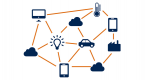
The Internet of Things (IoT) constitutes a network infrastructure that wirelessly links physical devices with software applications, enabling them to communicate and exchange data through network connectivity, cloud computing, and data collection.
In this instructor-led live training, participants will explore the fundamentals of IoT by guiding them through the development of an IoT sensor system using a Raspberry Pi.
Upon completion of this training, participants will be capable of:
- Grasping the core principles of IoT, including its components and communication methods
- Configuring a Raspberry Pi specifically for IoT applications
- Designing and deploying a custom IoT Sensor System
Audience
- Hobbyists
- Hardware and software engineers and technicians
- Technical professionals across all industries
- Novice developers
Course Format
- A blend of lectures, discussions, exercises, and extensive hands-on practice
Note
- The Raspberry Pi is compatible with various operating systems and programming languages. This course utilizes the Linux-based Raspbian OS and Python as the programming language. For specific setup requirements, please contact us to make arrangements.
- Participants must purchase their own Raspberry Pi hardware and components.
Course Outline
Introduction to IoT
- Understanding IoT Fundamentals
- Examples of IoT Devices and Platforms
Overview of IoT Components
- Analog Sensors
- Digital Sensors
Overview of IoT Communication Techniques
- Wi-Fi
- Bluetooth
- RFID
- Mobile Internet
Raspberry Pi Refresher
- Using GPIO Pins
- Communication Protocols
Setting Up the Raspberry Pi for IoT
- Connecting the Raspberry Pi to LAN via Ethernet
- Using SSH
- Installing a Server
- Overview of Google Cloud Messaging (GCM) Service
Creating an IoT Motion Sensor System with Raspberry Pi
- Overview of PIR Motion Sensor
- Interfacing the Hardware: Raspberry Pi, PIR Motion Sensor
- Creating a Database for Sensor Data Logging
- Recording the Sensor Data in the Database
- Triggering and Sending Push Notifications via GCM
Troubleshooting
Conclusion and Summary
Requirements
- Fundamental knowledge of embedded Linux systems
- Experience in setting up and using the Raspberry Pi
- Experience programming the Raspberry Pi using Python
Need help picking the right course?
uzbekistan@nobleprog.com or +919818060888
Introduction to IoT Using Raspberry Pi Training Course - Enquiry
Introduction to IoT Using Raspberry Pi - Consultancy Enquiry
Testimonials (4)
The ability of the trainer to align the course with the requirements of the organization other than just providing the course for the sake of delivering it.
Masilonyane - Revenue Services Lesotho
Course - Big Data Business Intelligence for Govt. Agencies
The oral skills and human side of the trainer (Augustin).
Jeremy Chicon - TE Connectivity
Course - NB-IoT for Developers
Practical examples and wider context given.
James - Mitsubishi Electric R&D Centre Europe BV (MERCE-UK)
Course - IoT Programming with Python
The trainer was very interactive and steadily paced.
Carolyn Yaacoby - Yeshiva University
Course - Raspberry Pi for Beginners
Related Courses
5G and IoT
14 HoursThis training aims to clarify what 5G networks are and their influence on smart technologies. We will explore both the advantages and disadvantages of the relationship between these technologies (5G/IoT), as well as the developmental trajectories of networks originally designed for the smart world.
6G and IoT
14 HoursPositioned to revolutionize IoT ecosystems via ultra-fast connectivity, advanced sensing, and integrated AI capabilities, 6G represents the next-generation wireless communication standard.
Designed for advanced-level participants eager to understand and harness the emerging intersection of 6G technologies and IoT applications, this instructor-led training is available both online and onsite.
Upon completing this course, learners will be able to:
- Articulate the core technical concepts underlying 6G.
- Analyze how 6G will transform IoT device communication and architecture.
- Assess 6G-enabled IoT use cases across various industries.
- Develop strategies for integrating 6G capabilities into existing IoT solutions.
Course Format
- Concept-focused lectures paired with expert discussions.
- Practical exercises designed to reinforce key engineering principles.
- Guided exploration of cases and scenario analysis.
Customization Options
- For customized training aligned with your organization's technology roadmap, please contact us to arrange.
Advanced Edge Computing
21 HoursDive deeper into the innovative realm of edge computing with this advanced course. Explore sophisticated architectures and tackle integration challenges, preparing to leverage the full potential of edge computing across diverse business environments. Gain expertise in cutting-edge tools and methodologies to deploy, manage, and optimize edge computing solutions that meet specific industry needs.
Big Data Business Intelligence for Govt. Agencies
35 HoursTechnological advancements and the exponential growth of information are fundamentally transforming business operations across various sectors, including government. The volume of government data and digital archiving is increasing rapidly, driven by the proliferation of mobile devices and applications, smart sensors and IoT devices, cloud computing solutions, and citizen-facing portals. As digital information becomes more expansive and complex, the management, processing, storage, security, and disposition of this data become increasingly challenging. New tools for capture, search, discovery, and analysis are enabling organizations to extract valuable insights from unstructured data. The government sector is at a critical tipping point, recognizing information as a strategic asset. Governments must now protect, leverage, and analyze both structured and unstructured data to better serve the public and meet mission requirements. As government leaders work to evolve into data-driven organizations, they are establishing the foundation to correlate dependencies across events, people, processes, and information.
High-impact government solutions will emerge from the integration of the most disruptive technologies:
- Mobile devices and applications
- Cloud services
- Social business technologies and networking
- Big Data and analytics
Big Data represents a key intelligent industry solution, enabling governments to make better decisions by acting on patterns revealed through the analysis of large volumes of related and unrelated, structured and unstructured data.
However, achieving these outcomes requires more than just accumulating massive amounts of data. "Making sense of these volumes of Big Data requires cutting-edge tools and technologies that can analyze and extract useful knowledge from vast and diverse streams of information," noted Tom Kalil and Fen Zhao from the White House Office of Science and Technology Policy in a post on the OSTP Blog.
The White House took a significant step toward helping agencies identify these technologies by establishing the National Big Data Research and Development Initiative in 2012. This initiative allocated over $200 million to maximize the potential of the Big Data explosion and the necessary analytical tools.
The challenges posed by Big Data are nearly as formidable as the promise it offers. One major challenge is efficient data storage. With budgets often tight, agencies must minimize storage costs per megabyte while ensuring data remains easily accessible for users to retrieve when and how they need it. Backing up such massive data volumes adds another layer of complexity.
Effective data analysis presents another significant challenge. Many agencies utilize commercial tools to sift through vast amounts of data, identifying trends that enhance operational efficiency. A recent MeriTalk study revealed that federal IT executives believe Big Data could help agencies save over $500 billion while also fulfilling mission objectives.
Custom-developed Big Data tools are also empowering agencies to meet their analytical needs. For instance, the Computational Data Analytics Group at Oak Ridge National Laboratory has made its Piranha data analytics system available to other agencies. This system has assisted medical researchers in identifying links that alert doctors to aortic aneurysms before they occur. It is also employed for more routine tasks, such as screening resumes to match job candidates with hiring managers.
Insurtech: A Practical Introduction for Managers
14 HoursInsurtech (also known as Digital Insurance) refers to the convergence of insurance and emerging technologies. Within the Insurtech domain, "digital insurers" leverage technological innovations in their business and operational models to reduce costs, enhance customer experience, and improve operational agility.
In this instructor-led training, participants will gain a comprehensive understanding of the technologies, methods, and mindset required to drive digital transformation within their organizations and across the broader insurance industry. The training is designed for managers who need to grasp the big picture, cut through the hype and jargon, and take the first concrete steps toward establishing an effective Insurtech strategy.
By the end of this training, participants will be able to:
- Discuss Insurtech and its components in a structured and intelligent manner
- Identify and clarify the role of each key technology within the Insurtech ecosystem
- Draft a general strategy for implementing Insurtech initiatives within their organization
Audience
- Insurers
- Technology professionals within the insurance industry
- Insurance stakeholders
- Consultants and business analysts
Course Format
- A blend of lectures, group discussions, practical exercises, and case study activities
Digital Transformation with IoT and Edge Computing
14 HoursThis instructor-led, live training in Uzbekistan (online or onsite) is designed for intermediate IT professionals and business managers who wish to understand how IoT and edge computing can drive efficiency, real-time processing, and innovation across various industries.
Upon completion of this training, participants will be able to:
- Understand the core principles of IoT and edge computing and their role in digital transformation.
- Identify use cases for IoT and edge computing in the manufacturing, logistics, and energy sectors.
- Differentiate between edge and cloud computing architectures and deployment scenarios.
- Implement edge computing solutions for predictive maintenance and real-time decision-making.
Applied Edge AI
35 HoursIn this comprehensive course, combine the transformative potential of AI with the agility of edge computing. Learn to deploy AI models directly on edge devices, from understanding CNN architectures to mastering knowledge distillation and federated learning. This hands-on training will equip you with the skills needed to optimise AI performance for real-time processing and decision-making at the edge.
Edge AI for IoT Applications
14 HoursThis instructor-led, live training in Uzbekistan (online or onsite) is aimed at intermediate-level developers, system architects, and industry professionals who wish to leverage Edge AI for enhancing IoT applications with intelligent data processing and analytics capabilities.
By the end of this training, participants will be able to:
- Understand the fundamentals of Edge AI and its application in IoT.
- Set up and configure Edge AI environments for IoT devices.
- Develop and deploy AI models on edge devices for IoT applications.
- Implement real-time data processing and decision-making in IoT systems.
- Integrate Edge AI with various IoT protocols and platforms.
- Address ethical considerations and best practices in Edge AI for IoT.
Edge Computing
7 HoursThis instructor-led, live training in Uzbekistan (available online or on-site) is designed for product managers and developers who aim to leverage Edge Computing to decentralize data management, thereby achieving faster performance through the use of smart devices deployed directly on the source network.
Upon completing this training, participants will be able to:
- Grasp the fundamental concepts and key advantages of Edge Computing.
- Recognize practical use cases and real-world examples where Edge Computing can be effectively applied.
- Design and implement Edge Computing solutions that enable faster data processing while reducing operational costs.
Edge Computing Infrastructure
28 HoursBuild a strong foundation in designing and managing a resilient edge computing infrastructure. Learn about open hybrid cloud infrastructures, managing workloads across diverse clouds, and ensuring flexibility and redundancy. This training provides essential knowledge on creating a scalable and secure infrastructure that supports the dynamic needs of modern applications with edge computing.
Federated Learning in IoT and Edge Computing
14 HoursThis instructor-led, live training in Uzbekistan (available online or on-site) is designed for intermediate-level professionals seeking to leverage Federated Learning to optimize IoT and edge computing solutions.
By the conclusion of this training, participants will be able to:
- Grasp the core principles and advantages of Federated Learning in IoT and edge computing.
- Deploy Federated Learning models on IoT devices to enable decentralized AI processing.
- Minimize latency and enhance real-time decision-making capabilities in edge computing environments.
- Tackle challenges related to data privacy and network constraints within IoT systems.
IoT Programming with Python
14 HoursThe Internet of Things (IoT) refers to a network infrastructure that wirelessly links physical objects with software applications, enabling them to communicate and exchange data through network communications, cloud computing, and data capture mechanisms. Python, a high-level programming language, is highly recommended for IoT development due to its clear syntax and robust community support.
In this instructor-led live training, participants will gain practical skills in programming IoT solutions using Python.
By the conclusion of this training, participants will be able to:
- Grasp the fundamentals of IoT architecture
- Master the basics of using Raspberry Pi
- Install and configure Python on a Raspberry Pi device
- Identify the advantages of utilizing Python for programming IoT systems
- Build, test, deploy, and troubleshoot an IoT system using Python and Raspberry Pi
Audience
- Developers
- Engineers
Format of the course
- A blend of lectures, discussions, exercises, and extensive hands-on practice
Note
- To request customized training for this course, please contact us to make arrangements.
NB-IoT for Developers
7 HoursIn this instructor-led live training in Uzbekistan, participants will explore the various aspects of NB-IoT (also known as LTE Cat NB1) while developing and deploying a sample NB-IoT-based application.
By the end of this training, participants will be able to:
- Identify the different components of NB-IoT and understand how they integrate to form a complete ecosystem.
- Understand and explain the security features built into NB-IoT devices.
- Develop a simple application to track NB-IoT devices.
Raspberry Pi for Beginners
14 HoursThe Raspberry Pi is an extremely compact, single-board computer.
In this instructor-led, live training session, attendees will learn how to configure and program the Raspberry Pi to function as an interactive and potent embedded system.
Upon completion of this training, participants will be capable of:
- Configuring an IDE (integrated development environment) to optimize development productivity.
- Programming the Raspberry Pi to manage devices such as motion sensors, alarms, web servers, and printers.
- Gaining a comprehensive understanding of the Raspberry Pi's architecture, including input and connector options for add-on devices.
- Evaluating various programming language and operating system choices available for the platform.
- Testing, debugging, and deploying the Raspberry Pi to address real-world challenges.
Audience
- Developers
- Hardware/software technicians
- Technical professionals across all industries
- Hobbyists
Course Format
- A blend of lectures, discussions, exercises, and extensive hands-on practice.
Important Note
- The Raspberry Pi is compatible with various operating systems and programming languages. This course utilizes Linux-based Raspbian as the operating system and Python as the programming language. For alternative setups, please contact us to arrange.
- Participants are responsible for purchasing their own Raspberry Pi hardware and components.
Setting Up an IoT Gateway with ThingsBoard
35 HoursThingsBoard is an open-source IoT platform that provides device management, data collection, processing, and visualization for your IoT solution.
In this instructor-led live training, participants will learn how to integrate ThingsBoard into their IoT solutions.
By the end of this training, participants will be able to:
- Install and configure ThingsBoard
- Understand the fundamentals of ThingsBoard features and architecture
- Build IoT applications using ThingsBoard
- Integrate ThingsBoard with Kafka for telemetry device data routing
- Integrate ThingsBoard with Apache Spark for data aggregation from multiple devices
Audience
- Software engineers
- Hardware engineers
- Developers
Course format
- A combination of lectures, discussions, exercises, and extensive hands-on practice
Note
- To request customized training for this course, please contact us to arrange.